
NEWS
Crawfordsville Building’s Revival Wins Cook Cup
Award recognizes transformation of historic Ben-Hur Building
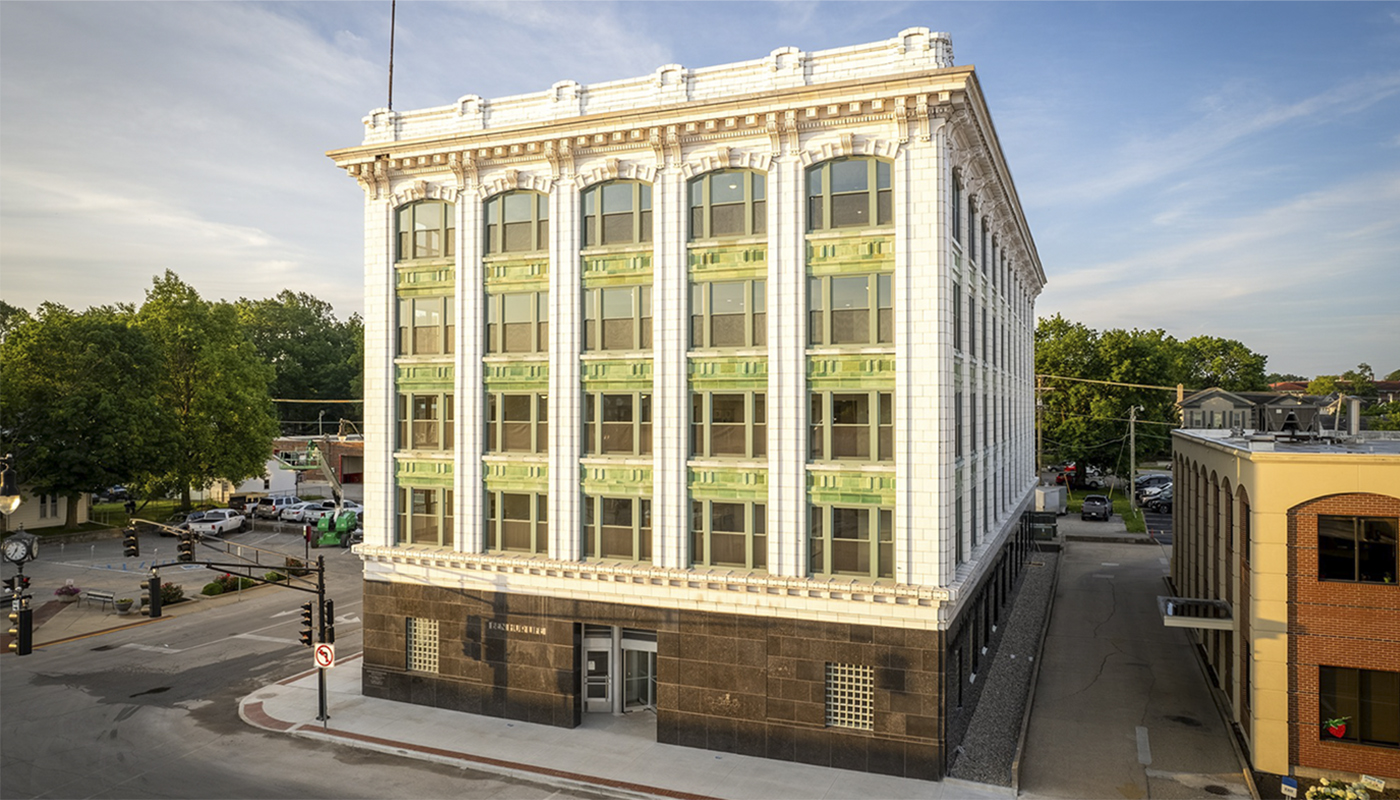
Towering Comeback
In Crawfordville, the Ben-Hur Building dominates the city streetscape, its size and central location making it impossible to ignore. For decades, the empty and deteriorating landmark loomed over downtown like a dark cloud, but today, its gleaming white terra cotta shines again following the building’s $13 million transformation as apartments and meeting space, a dramatic reversal that earned AP Development LLC Indiana Landmarks’ 2026 Cook Cup for Outstanding Restoration.
The Ben-Hur Building dates to the early 1900s, when the fraternal benefit organization Tribe of Ben-Hur—founded in Crawfordsville and inspired by Gen. Lew Wallace’s bestselling novel Ben-Hur: A Tale of the Christ—commissioned a new headquarters to reflect its national prominence. Designed by Indianapolis firm Herbert L. Bass & Co., the building opened in 1911 at Main and Water streets. For years, it served as a hub of civic and commercial activity, housing offices, meeting rooms, retail space, and the organization’s headquarters. A 1940 renovation replaced the original street level white tile with black granite panels.
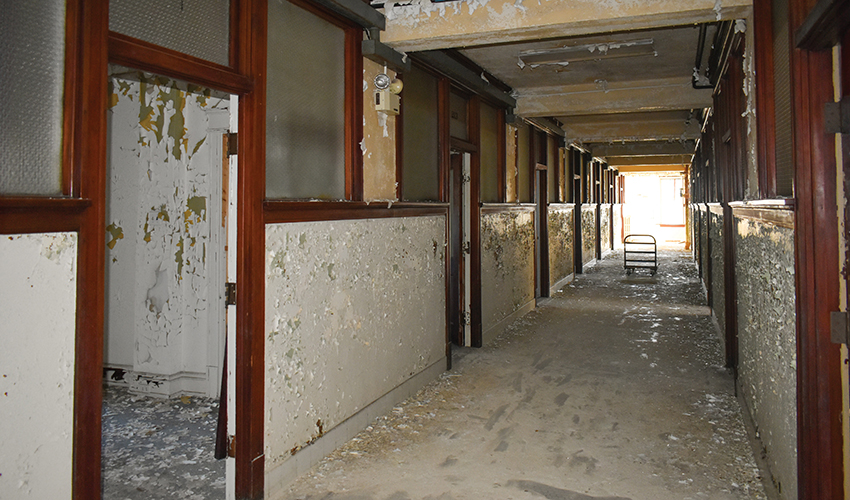
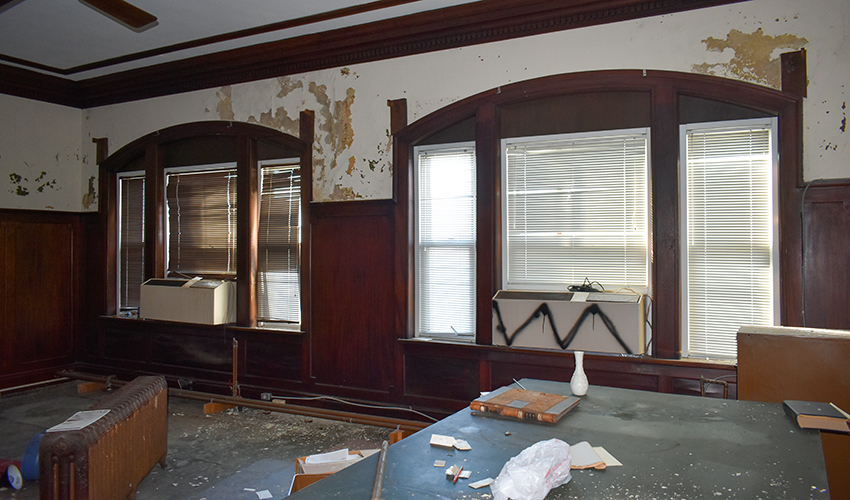
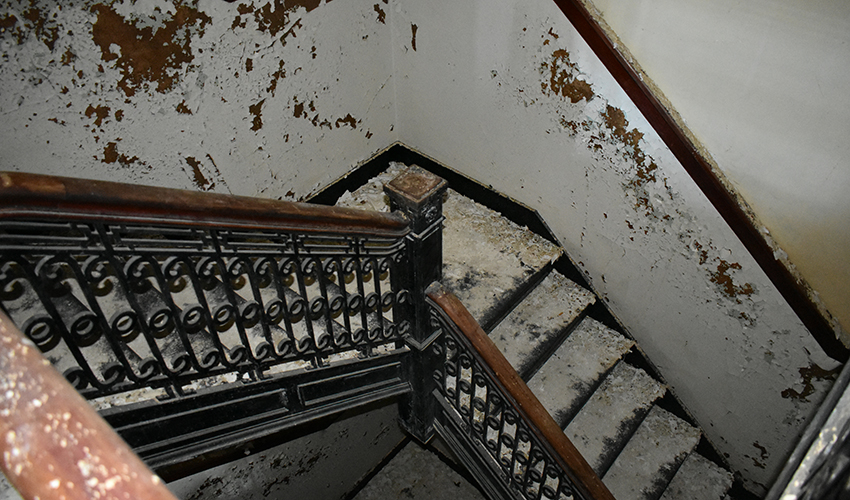
By 2006, the building stood empty after multiple redevelopment proposals had stalled. Decades of vacancy had taken a toll: a failing roof allowed water to infiltrate, damaging the once-grand lobby and interior. Terra cotta began to loosen, forcing sections of the surrounding sidewalks to be covered or roped off.
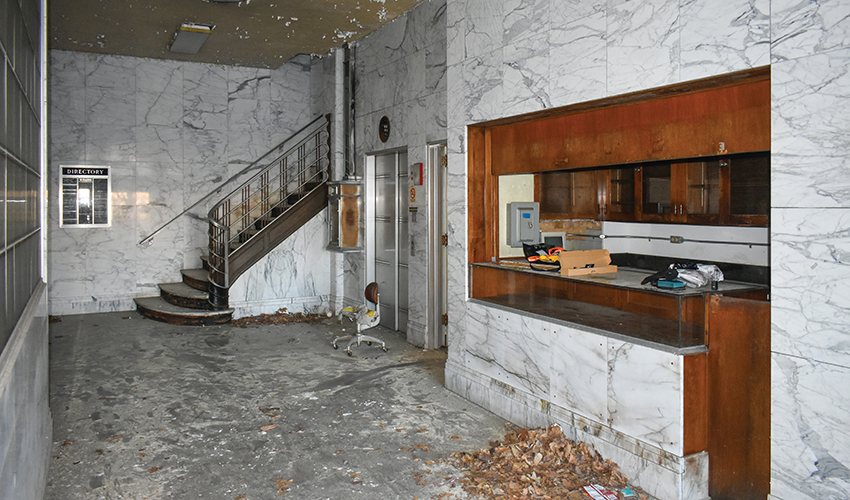
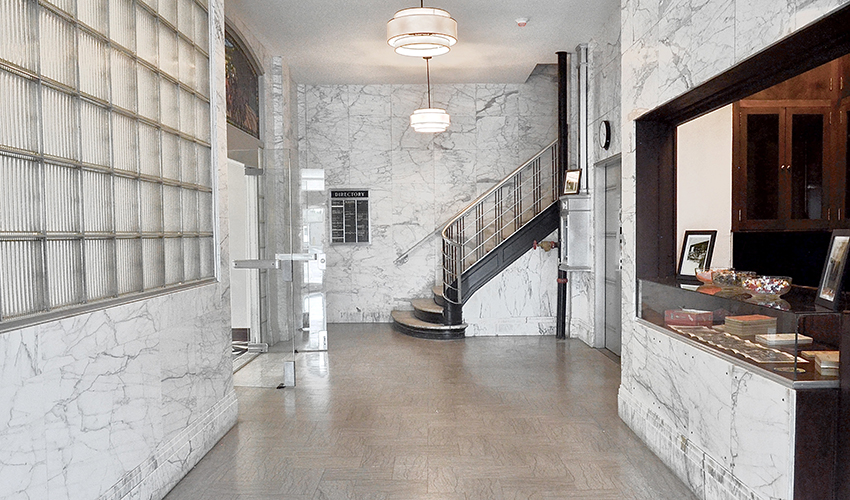
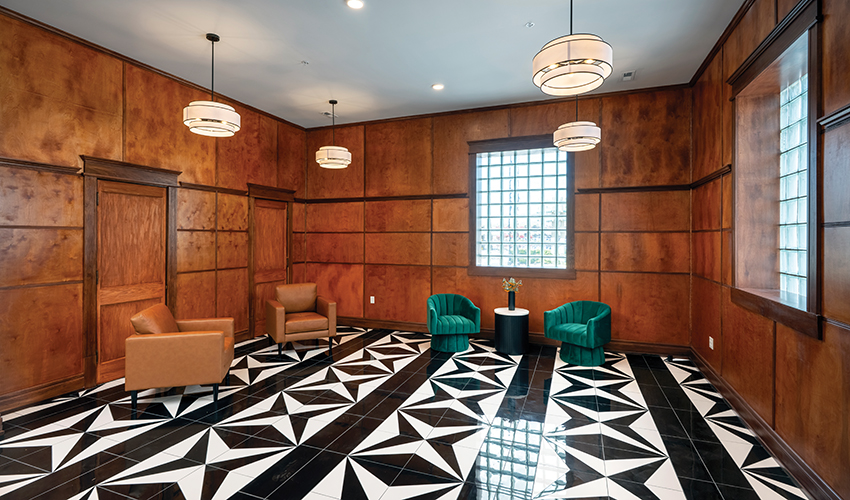
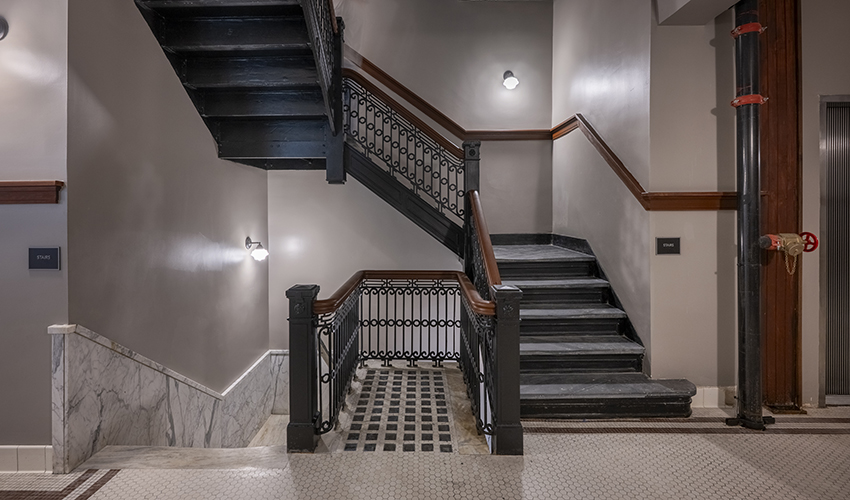
Despite its diminished condition, much of the building’s historic features and original layout remained intact. The City sought a reuse that would restore its original character while adapting it for modern use and reestablishing its role downtown. In 2021, AP Development launched a comprehensive restoration, reviving key elements including the original corridors, lobby, façade, and hardwood and terrazzo floors, while upgrading all major systems and adding a new accessible entrance.
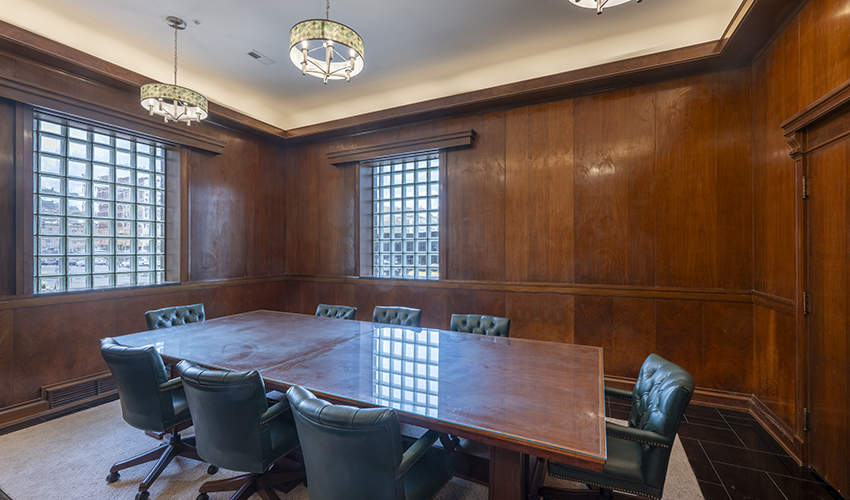
Craftspeople carefully restored the 1911/1940 lobby, including its staircase, lunch counter, revolving door, and elevator, and replicated missing historic elements stolen by vandals based on original designs. The Tribe of Ben-Hur boardroom table was restored for use in a conference room, and crews replicated millwork throughout where the original could not be saved. In a happy surprise, workers discovered original burl walnut paneling underneath wallpaper in the conference room.
“We intentionally took our time to bring back the building’s integrity while extending the life of the structure for the next 100 years,” says Dustin McClain, director of construction management for AP Development LLC. “I’m proud we didn’t go the path of least resistance, taking the character away or trying to do things on the cheap. Instead we intentionally took our time to select the right materials. If we could restore it, or find salvaged materials, we did.”
“Saving the building was a matter of persistence and patience. We could have easily developed it more quickly, gutting it out and modernizing it, but we would have lost the historic nature,” says Crawfordsville Mayor Todd Barton. “The City invested a lot of money and time into this to make sure it happened. I can’t imagine tearing it down and putting in a parking lot. That would have been a travesty.”
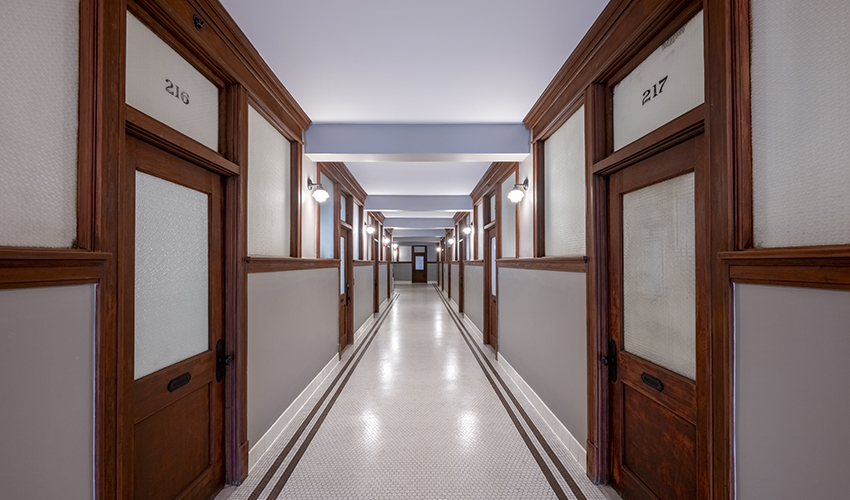
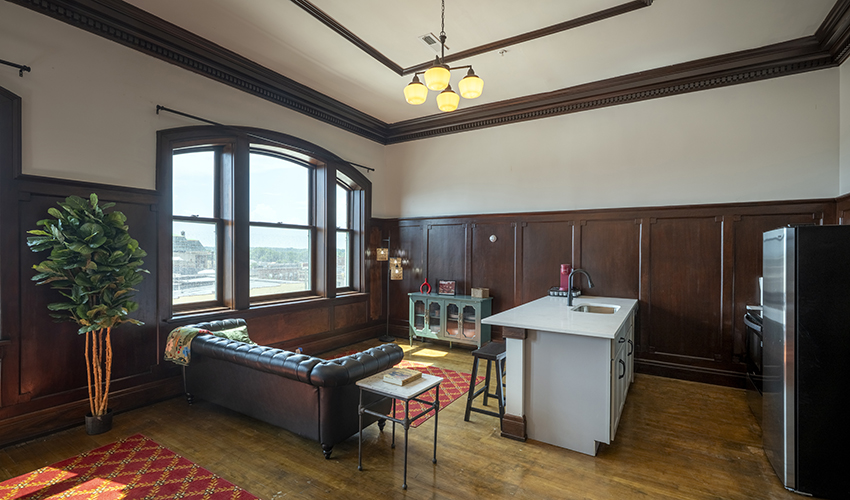
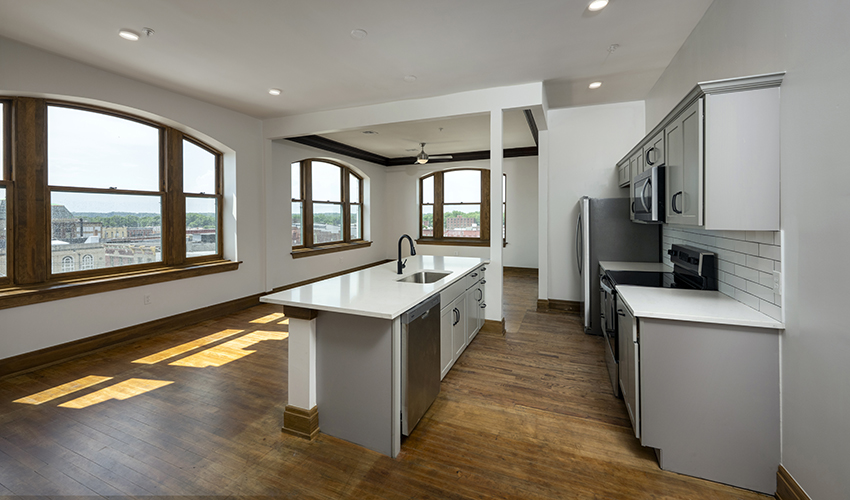
The project introduced 49 modern apartments and repurposed the historic boardroom as a short-term rental. At its 2025 reopening, the Ben-Hur Building welcomed more than 1,000 visitors, signaling strong community enthusiasm for the project. The redevelopment also brought new life to downtown by adding residents who have increased foot traffic to nearby shops and restaurants and supported the city’s broader goal of creating a more vibrant, walkable urban core.
The project aligned closely with Crawfordsville’s Stellar Communities initiative launched in 2014, reinforcing long-term investment in downtown. The preservation-driven transformation, supported by city and county leadership, local tax increment financing, state tax credits, and the Federal Historic Rehabilitation Credit, reflected a shared commitment to revitalization and the power of public-private collaboration.
“The support from the community from the beginning has been incredible. Everyone was eager for this landmark to be redeveloped,” says Jon Anderson, president of AP Development LLC. “Throughout the process of restoring the Ben-Hur, everyone had a story about the building and their connections to it. That made it all the more important to save the building and give it new life.”
“Few projects in recent memory have so completely transformed our community—physically, economically, and socially—as the revitalization of this long-neglected landmark,” adds Crawfordsville Mayor Todd Barton. “The Ben-Hur Building stands as a model of what can be achieved when vision, craftsmanship, and civic partnership come together. It demonstrates that historic preservation is not simply about saving buildings, it is about restoring identity, fostering community, and creating opportunity.”
This article first appeared in the July/August issue of Indiana Preservation, Indiana Landmarks’ member magazine.
Stay up to date on the latest news, stories, and events from Indiana Landmarks, around the state or in your area.