
NEWS
Historic Indianapolis Estates Added to National Register
Listing amplifies properties’ architectural and historical significance and their owners’ preservation efforts.
Honor Roll
The National Register of Historic Places recognizes properties the federal government considers worthy of preservation because of their significance in American history, architecture, archaeology, engineering, or culture. Having a property distinguished by this listing conveys the honor of national recognition and may make owners eligible for certain tax credits and grants. In Indianapolis, two manor estates representing the height of early twentieth-century opulence—Laurel Hall and the Lacy-Berger Mansion—achieved listing in the National Register in June, a testament to their extraordinary architecture and history and their owners’ efforts to preserve their heritage.
Located on the city’s northeast side adjacent to the present-day campus of Cathedral High School, Laurel Hall was completed in 1916 for Stoughton A. Fletcher II and his wife, May (Henley) Fletcher. A relative of city father and banking magnate Calvin Fletcher, Stoughton hired architect Herbert L. Bass to design a home for entertaining a steady stream of dignitaries, situated atop a bluff along Fall Creek on a 1,500-acre tract of wooded rural land. Numerous massive chimneys and a series of steep gables distinguish the roofline of the yellow brick mansion with green clay tile roof and limestone accents.
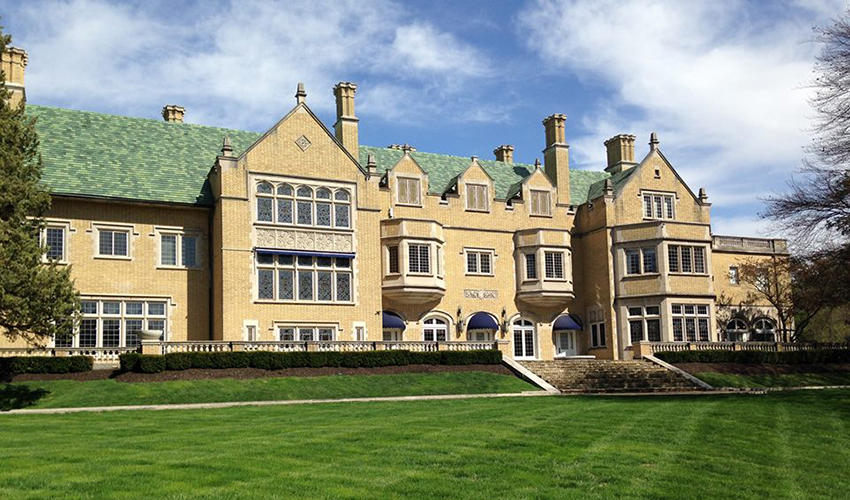
Laurel Hall, Indianapolis
Inside, leaded casement windows and an abundance of richly carved wood wall paneling modeled after medieval English sources continue the extravagant design. Landscape architect Alex Tuschinsky planned the grounds to include a horseracing track, a winding driveway with decorative concrete bridge, and a terrace with steps spilling down the bank of the ravine. In 1921, the Indianapolis News described Laurel Hall as “one of the most imposing and unusual country places in the central west.”
The Fletchers did not reside long in their idyllic American castle. By 1921, family tragedy and financial instability led Mr. Fletcher rent the estate to Indiana statesman Thomas Taggart for the breeding of racehorses. The Sisters of Providence bought the property in 1926 for the Ladywood School, a Catholic boarding school for girls. The estate housed a dormitory and chapel for Ladywood-St. Agnes until its closure in 1976, later becoming subdivided for apartments and the Hudson Institute, a policy research center.
In more recent years, Laural Hall recaptured its past grandeur as a gathering place. Since 2006, the landmark has housed the national headquarters of the fraternity Phi Kappa Psi and its associated foundation, which also rents the mansion for weddings and events. When the fraternity wanted to further distinguish Laurel Hall with National Register listing, Indiana Landmarks supported the nomination with a grant from the Marion County Historic Preservation Fund in partnership with The Indianapolis Foundation and the Central Indiana Community Foundation (CICF).
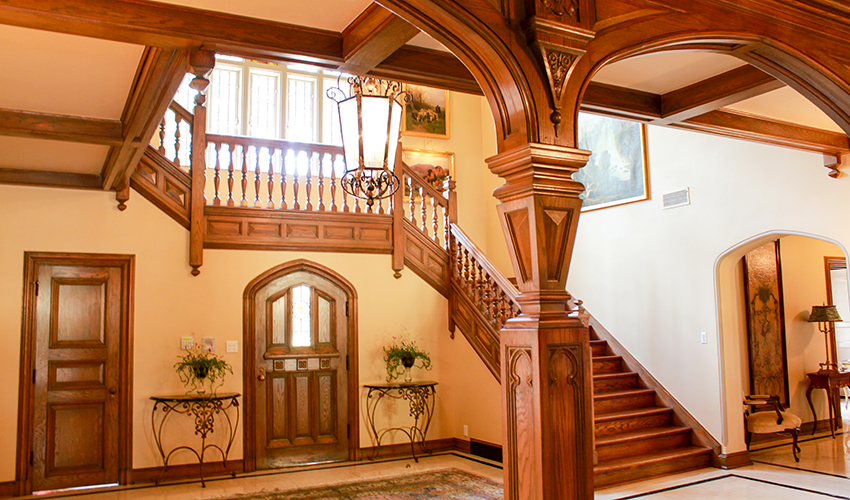
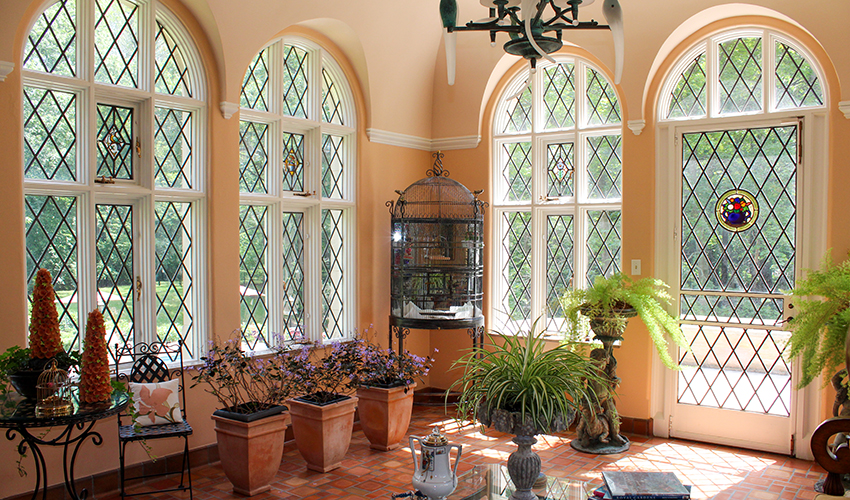
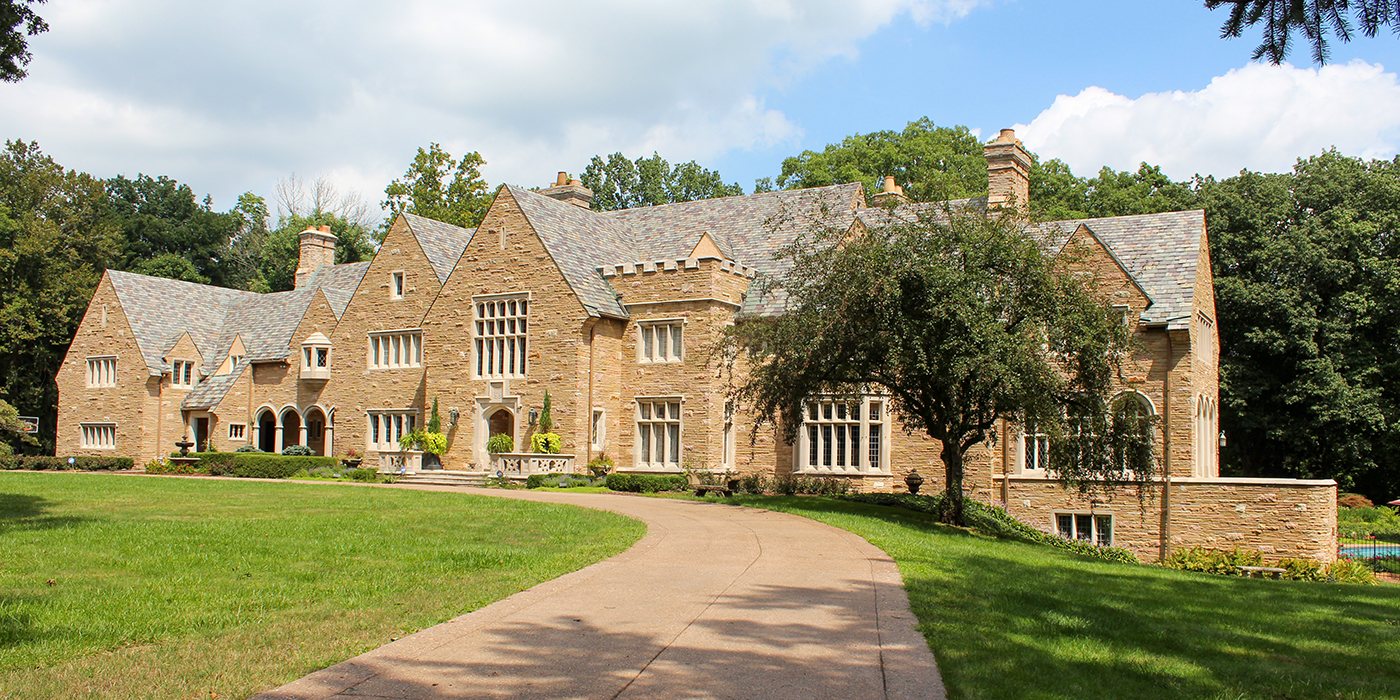
Located across Indianapolis on Sylvan Road near Crooked Creek, the Lacy-Berger Mansion has maintained its original use as a single-family residence since it was completed in 1933 for Howard J. Lacy, president of United States Corrugated Fiber Box Company, and his wife Martha. Designed by architect and builder Henry L. Simons in the Tudor Revival style, the 56-room house recalls an English manor on its seven-acre site, its sandstone ashlar exterior distinguished by limestone trim, arcaded porches, a crenellated parapet, and slate roof. Hand-hewn wood beams, panels, and doors lend richness to the interior, which incorporates a two-story great hall with oak staircase, a library, billiards room, and conservatory.
Current owners Alice and David Berger bought the Lacy Mansion in 2008 and began painstakingly restoring it to its original glory, generously opening the property to share its grandeur with others, including hosting a holiday open house for Indiana Landmarks.
“Having been a commissioner on the Meridian Street Preservation Commission, appointed by two governors, I knew the next step for our home was to get it on the National Register of Historic Places,” says Alice Berger. “It’s the first and most important step of many toward preserving the Lacy Mansion for future generations of Hoosiers.”
Stay up to date on the latest news, stories, and events from Indiana Landmarks, around the state or in your area.