
NEWS
Celebrating a Century in Speedway
Examining the vision that shaped the historic town’s development.
A Horseless City
At the turn of the twentieth century, the rise of the automobile was making its mark on Indianapolis. By 1909, the city was home to 17 auto and auto parts manufacturers, positioning Indianapolis as the nation’s fourth-largest automobile producer by the following year. Around the same time, automotive entrepreneur Carl Fisher began looking for land to build a proving ground where automakers could test the limits of their machines. With help from his friend and real estate developer Lemon “Lem” Trotter, Fisher located farmland five miles northwest of the city, joining with partners James Allison, Arthur Newby, and Frank Wheeler to purchase the site and open the Indianapolis Motor Speedway in the spring of 1909.
Fisher envisioned the area not just as an industrial manufacturing hub, but as a well-appointed, self-contained “horseless city” where workers could easily walk between home, work, shops, and eateries. He shared his vision with Indianapolis journalist William Herschell in 1909: “We are coming into a fast-moving age and the old horse can’t go the pace. Wouldn’t it be a great idea to build a horseless city just opposite the (Indianapolis) Motor Speedway, an industrial city devoted to motorization of all traffic? Electricity and gas would be the motive powers. Every business house, industrial plant, and home would have the most modern equipment. The homes would be homes and not the kind of shacks that usually infest an industrial center.”
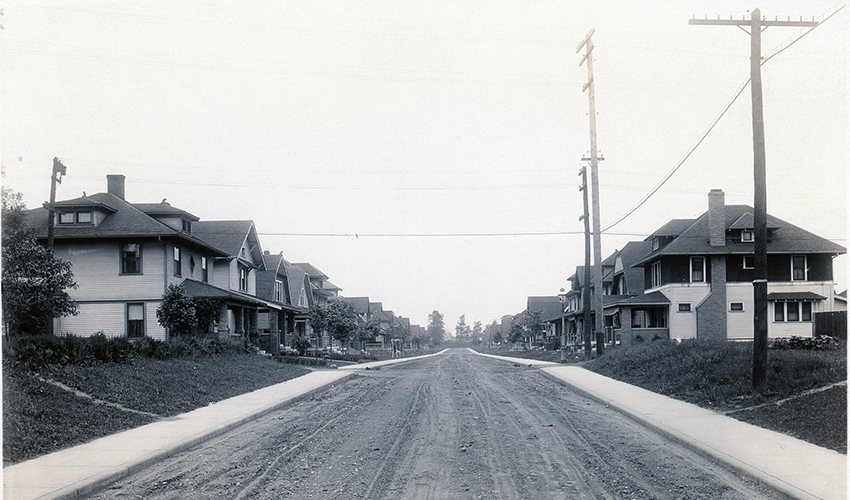
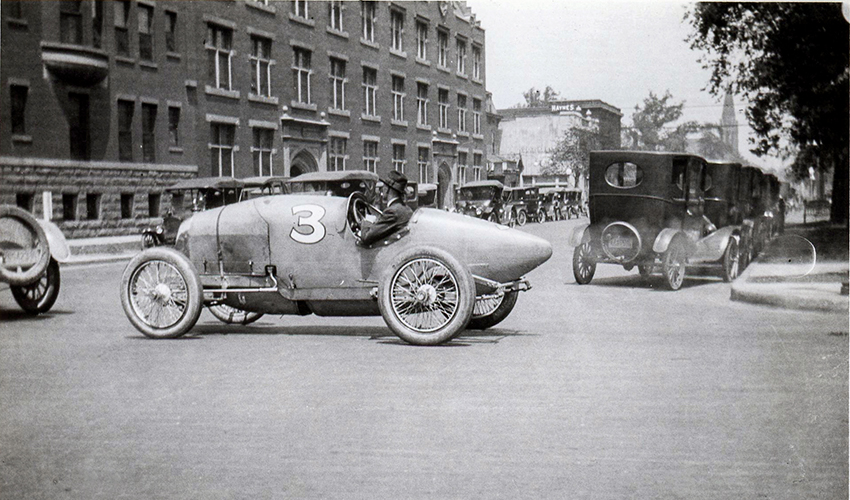
In 1912, Lem Trotter purchased 350 acres of land surrounding Fisher’s track and platted the town of Speedway, with property held jointly by Trotter, Fisher, and Allison through the Speedway Realty Company. Fisher and Allison hoped the development would attract workers for Prest-O-Lite, their battery and auto headlight company, which relocated the same year after a few too many explosions in Indianapolis (caused by the headlight’s highly combustible acetylene gas) resulted in city officials asking them to move operations.
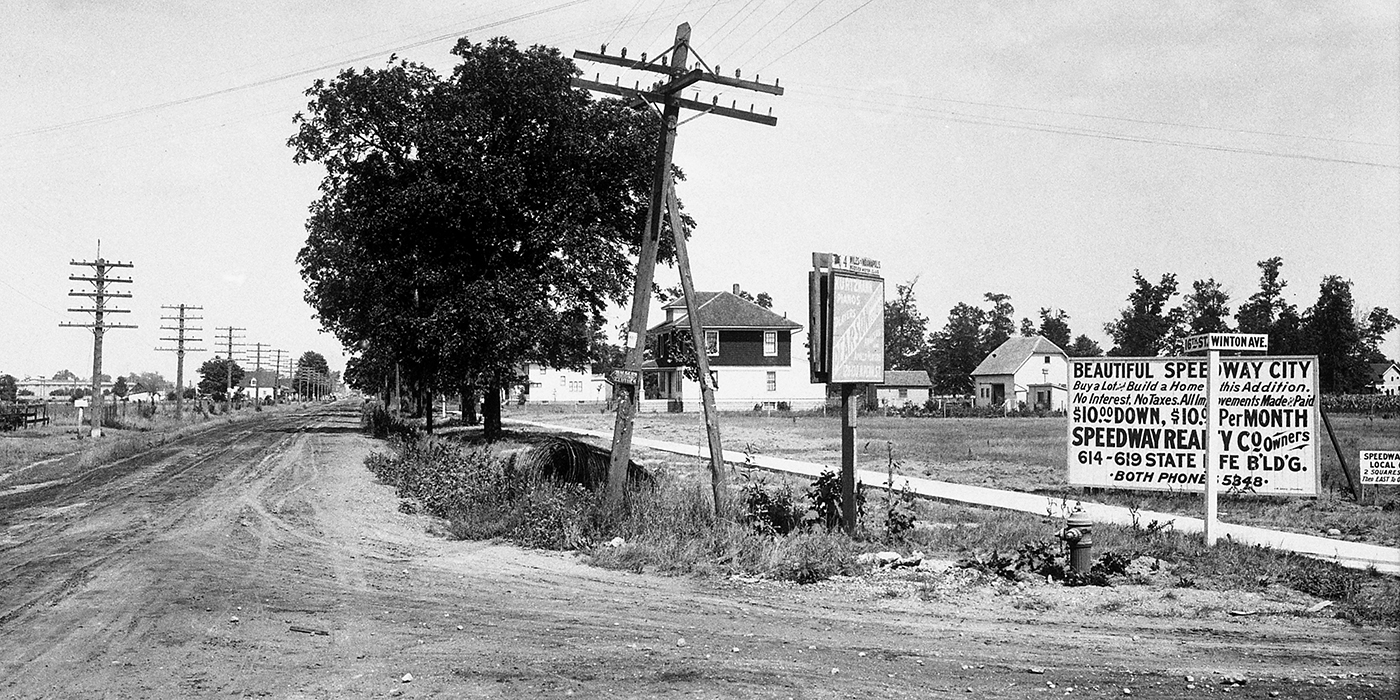
Trotter’s plat of Speedway placed businesses and storefronts on the west side of Main Street, creating a buffer between housing and industrial development, and orienting homes so residents would not have a direct view of factories. Streets ran numerically north to south, while east-west streets were named for popular automobile brands of the era, including Auburn, Cord, Winton, and Ford. To attract buyers, Speedway Realty Company advertised the town’s charms and modern amenities—tree-lined streets with electric lights, cement walks, gravel roads, utilities, and easy access to the interurban rail system—all with lots available for $10 down and $10 per month.
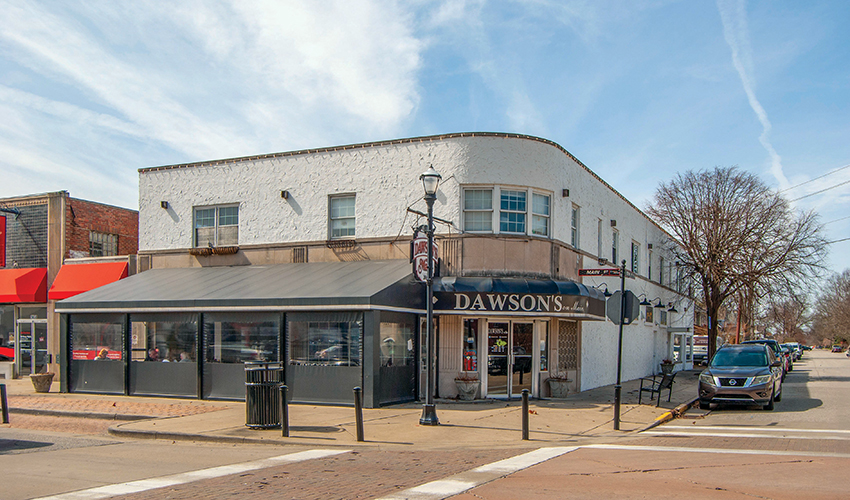
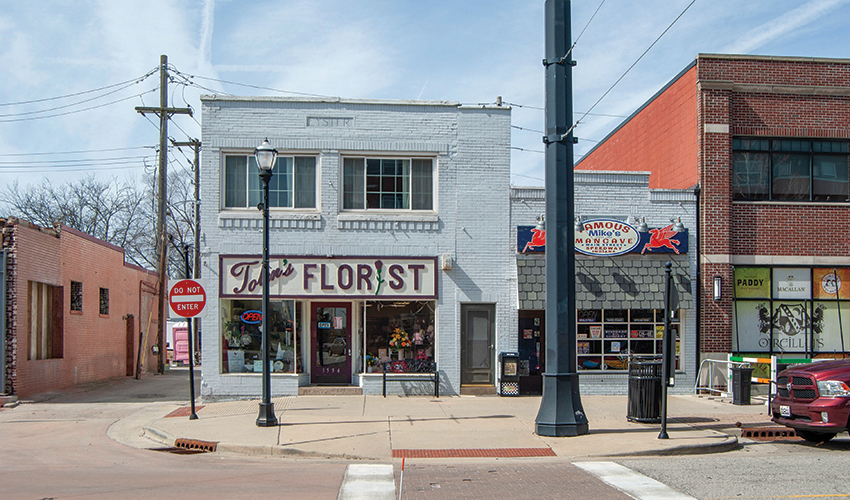
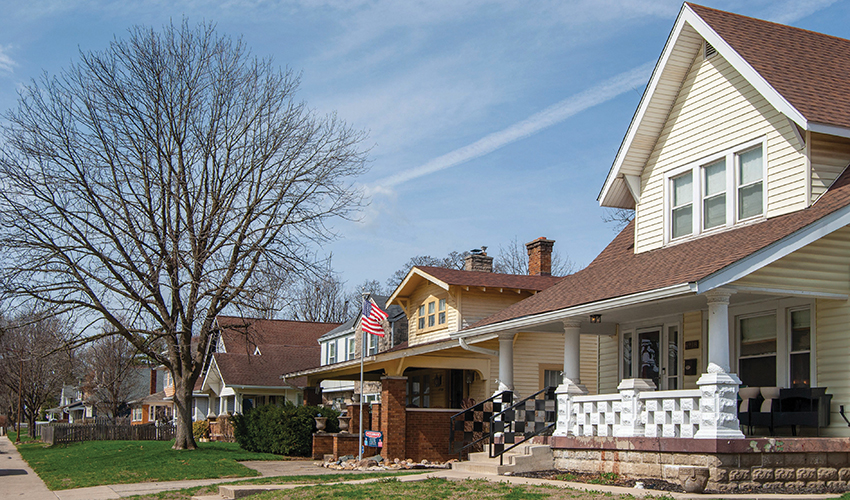
Their promotion worked, spurring construction of homes, restaurants, grocery and general stores, a drug store, a barber shop, and other businesses. The Town of Speedway incorporated in 1926 with a population of 507.
Today, Speedway remains a testament to Fisher’s vision, a mix of historic and modern development still fueled by the racing industry and a spirit of innovation. The National Register-listed Speedway Historic District encompasses the town’s original plat, and the area still features the period-revival homes and bungalows built for Speedway’s early industrial workforce, along with historic commercial buildings on Main Street that house shops, restaurants, and other businesses.
To mark Speedway’s 100th anniversary, Indiana Landmarks’ Indiana Automotive affinity group will host a tour July 17 and 18, 2026, highlighting both preservation efforts and celebrating the town’s racing heritage. See more information and get tickets.
This article first appeared in the May/June issue of Indiana Preservation, Indiana Landmarks’ member magazine.
Stay up to date on the latest news, stories, and events from Indiana Landmarks, around the state or in your area.